monday.com Services
For decades, project coordination has depended on human availability. Tasks are assigned, progress is tracked, updates are shared, and decisions are made, all within the constraints of working hours, time zones, and human bandwidth. That model is changing. The rise of AI agents for project management, often referred to as digital workers, is redefining how projects are coordinated and executed.
These systems do not simply automate isolated tasks. They operate continuously, monitor workflows in real time, and make context-aware decisions across project environments. Unlike traditional automation, which follows predefined rules, AI agents can interpret data, adapt to changes, and coordinate activities across systems. They act as always-on operational layers that ensure workflows continue moving even when teams are offline.
According to McKinsey, AI-driven automation and agent-based systems could automate 60% to 70% of current work activities across industries, significantly transforming operational models. At the same time, research from Deloitte, particularly the 2026 Global Human Capital Trends and Tech Trends 2026 reports, highlights the emergence of digital workers as a core component of enterprise productivity systems.
At Creative Bits, we view AI agents for project management as the next evolution of workflow automation, moving from static processes to dynamic, intelligent coordination systems. This article explores how these intelligent systems enable 24/7 project coordination through autonomous task management, real-time monitoring, and intelligent resource allocation.
1. From Automation to Autonomous Coordination
Traditional workflow automation focuses on predefined triggers and actions. For example, when a task is completed, a notification is sent, or the next task is assigned. While effective, these systems are limited by their rigidity. AI agents for project management introduce a new layer of intelligence. Instead of simply executing rules, they interpret context and make decisions based on real-time data. This allows them to handle complex workflows that would otherwise require human intervention.
Research by WebBuddy LLC on intelligent automation shows that AI systems capable of adaptive decision-making significantly improve operational efficiency compared to rule-based automation.
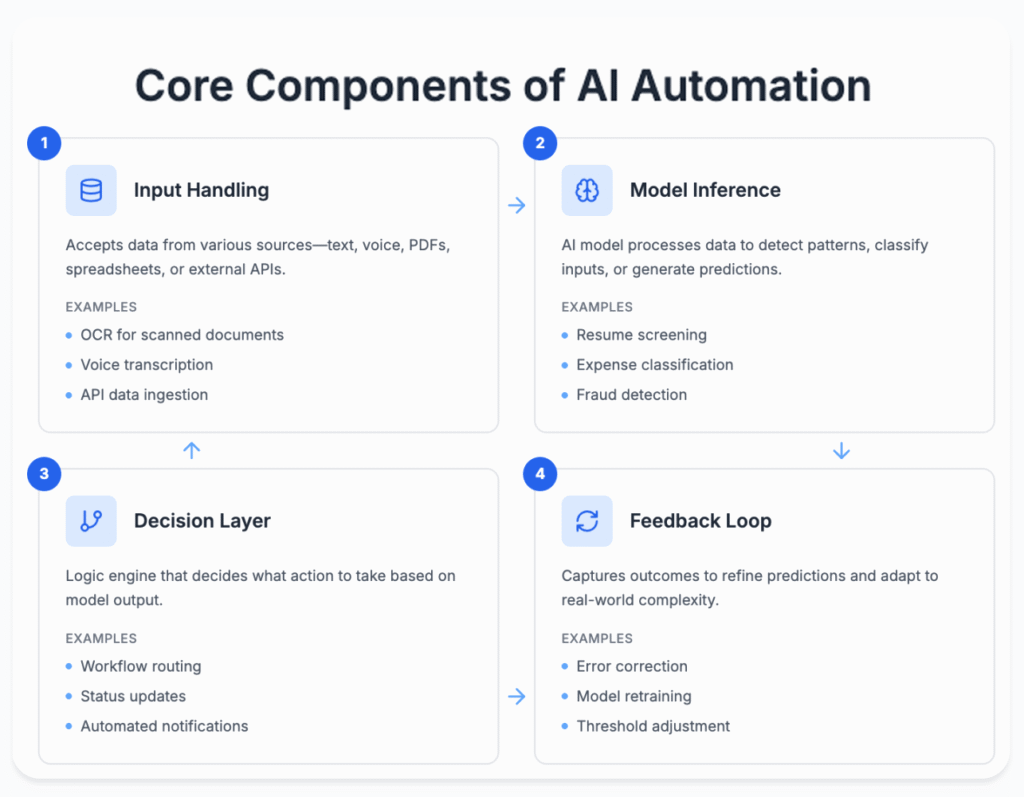
In project management environments, this means that AI agents can monitor multiple workflows simultaneously, identify dependencies, and adjust actions dynamically. For example, if a task is delayed, the agent can automatically reschedule dependent tasks, notify stakeholders, and suggest corrective actions.
This shift transforms automation into coordination. Instead of supporting workflows, AI agents actively manage them. At Creative Bits, we often describe this as moving from workflow automation to workflow intelligence.
2. Autonomous Task Management and Execution
One of the most immediate applications of AI agents for project management is in task management. Traditional systems rely on manual assignment and tracking, which becomes increasingly complex as projects scale. AI agents can autonomously manage tasks by analyzing project data, understanding dependencies, and assigning work based on priorities and constraints. They can create tasks, update statuses, and ensure that workflows progress without constant human input.
Research in task automation by ScienceDirect highlights that AI-driven systems can reduce administrative workload significantly, allowing teams to focus on higher-value activities. In practice, this means that repetitive coordination tasks, such as assigning responsibilities, updating deadlines, and tracking progress, can be handled by AI agents. This reduces the burden on project managers and improves consistency across workflows.
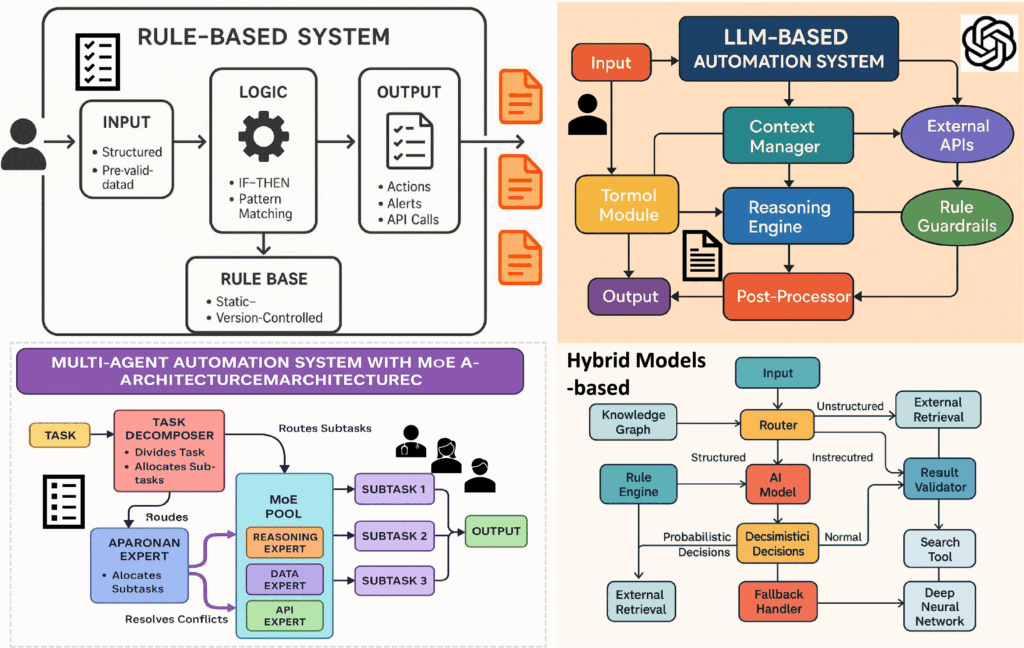
Additionally, AI agents can learn from past project data. By analyzing historical patterns, they can predict which tasks are likely to require more time or resources and adjust plans accordingly. This creates a feedback loop where each project improves the system's ability to manage future tasks. At Creative Bits, we integrate AI-driven task management into workflow platforms like monday.com, enabling seamless coordination across teams and tools.
3. Real-Time Progress Monitoring and Risk Detection
Project visibility has traditionally relied on periodic updates and status reports. While these provide insights into progress, they are inherently reactive. AI agents for project management enable continuous monitoring, analyzing project data in real time to detect deviations from expected performance. This allows teams to identify issues early and take corrective action before problems escalate. For example, if a task is progressing more slowly than expected, the AI agent can flag it as a potential delay. If resource utilization exceeds capacity, the system can identify a risk of overload.
Research on real-time analytics shows that continuous monitoring improves decision-making speed and reduces operational risks, according to OptiSol. AI agents also enhance transparency by aggregating data from multiple sources. Instead of relying on fragmented information across tools, teams receive a unified view of project health.
This capability is particularly valuable in distributed teams, where coordination across time zones can create visibility gaps. AI agents operate continuously, ensuring that progress is tracked even when team members are offline. At Creative Bits, we design monitoring systems that integrate AI insights directly into workflow dashboards, enabling proactive management rather than reactive reporting.
4. Intelligent Resource Allocation and Optimization
Resource allocation is one of the most complex aspects of project management. Balancing workloads, matching skills to tasks, and ensuring optimal utilization require constant adjustment. AI agents for project management can analyze multiple variables, including workload, skill sets, deadlines, and project priorities, to optimize resource allocation dynamically. This goes beyond simple scheduling, enabling systems to make data-driven decisions that improve efficiency.
Research in operations management highlights the benefits of AI-driven resource optimization in reducing bottlenecks and improving throughput, as per ScienceDirect.
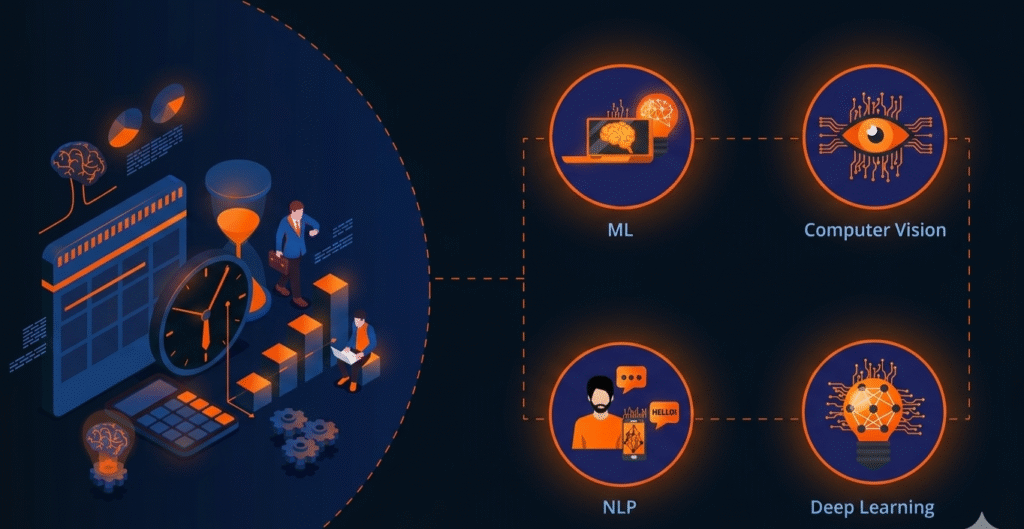
For example, if a team member is overloaded, the AI agent can redistribute tasks to maintain balance. If a project requires specific expertise, the system can identify the most suitable resource based on historical performance data. This dynamic allocation ensures that resources are used effectively, reducing delays and improving outcomes.
In addition, AI agents can simulate different allocation scenarios, allowing teams to evaluate potential strategies before implementation. This supports better decision-making and reduces uncertainty. At Creative Bits, we integrate intelligent resource allocation into workflow systems, enabling organizations to scale operations without increasing complexity.
Building the Always-On Project Engine with AI Agents for Project Management
The Digital Worker Revolution represents a fundamental shift in how projects are managed. AI agents for project management are not just tools; they are operational partners that enable continuous coordination, monitoring, and optimization. By implementing them, organizations can move from manual, time-bound coordination to 24/7 workflow execution. Tasks are managed autonomously, progress is monitored in real time, and resources are allocated intelligently.
This transformation allows teams to focus on strategic and creative work while AI systems handle operational complexity. At Creative Bits, we help organizations design and implement AI-powered workflow systems that are scalable, efficient, and aligned with business goals. Because the future of project management is not just about managing work, it is about building systems that manage themselves.