monday.com Services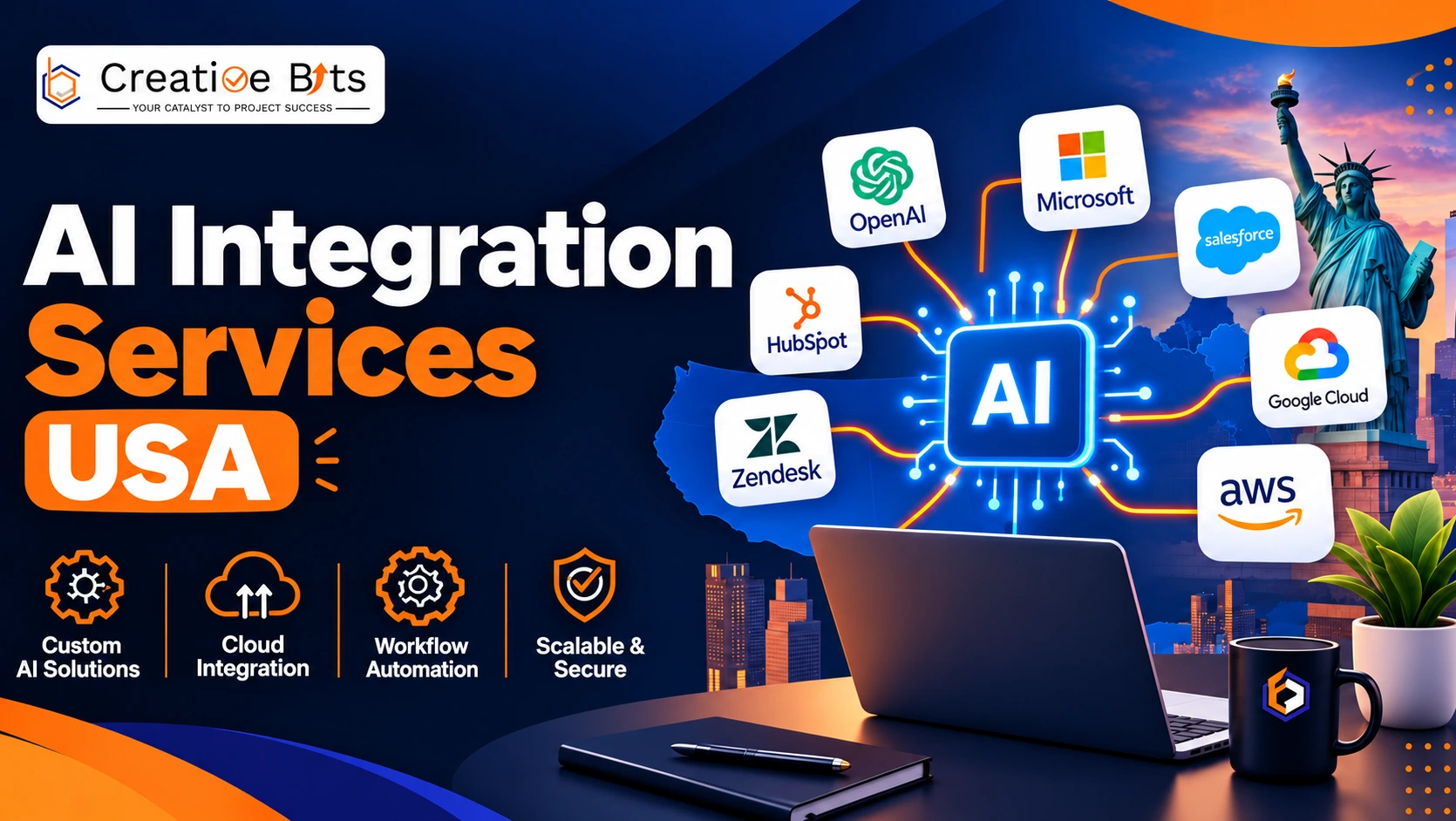
How Can AI Integration Services USA Businesses Trust Actually Deliver Results?
Every business searching for AI integration services in the USA hears the same pitch: connect AI to your systems, boost productivity, and transform operations. The reality is more specific: good integration means AI reading and acting on your real data through your CRM, ERP, or ticketing system, not a chatbot bolted on beside it. Here's what actually separates a working integration from a stalled pilot.
AI System Integration Services - What They Actually Involve
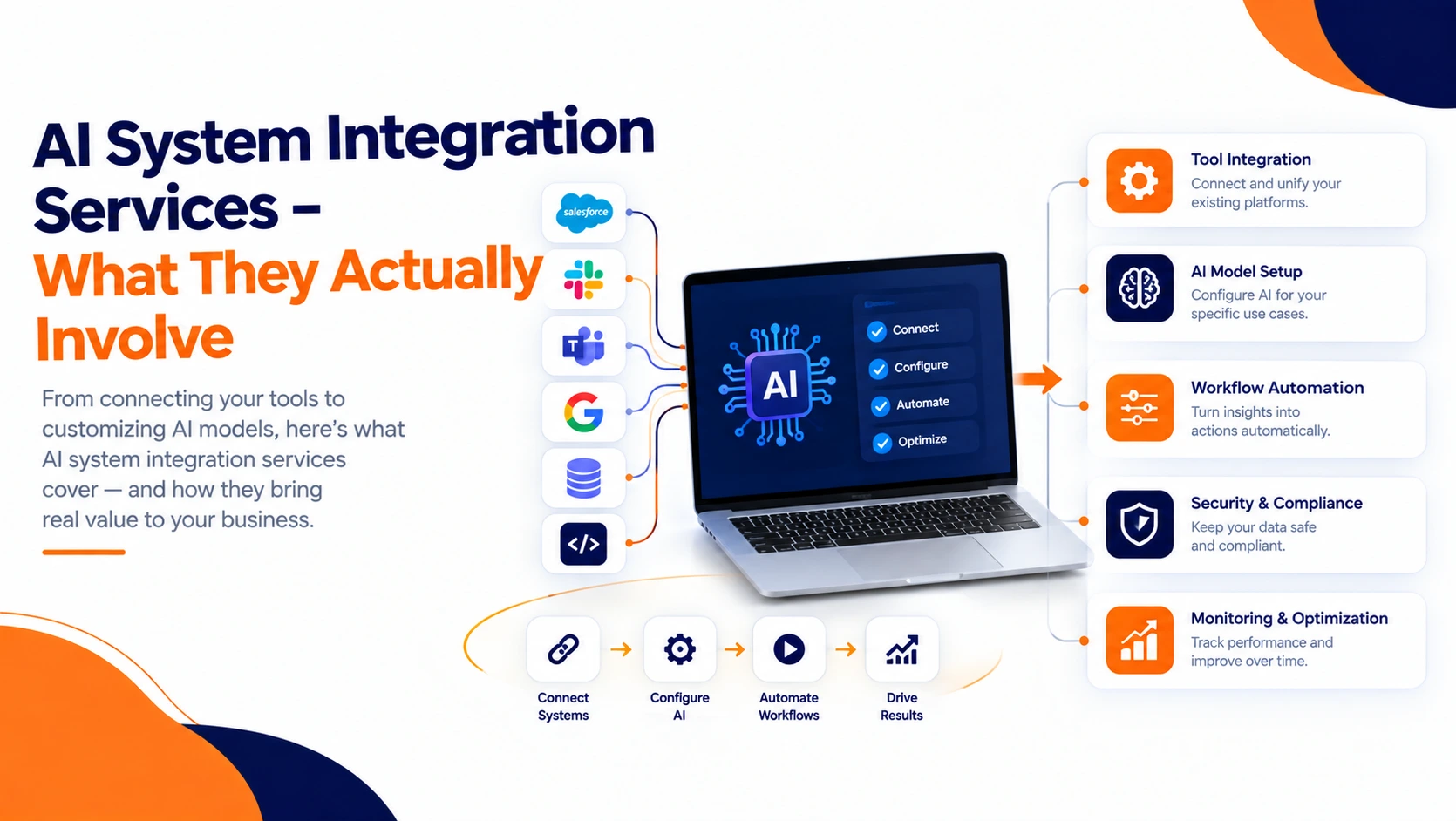
At its core, AI system integration services connect models to the systems where work already happens- the CRM, ERP, or document store- through supported APIs rather than screen-scraping or manual workarounds. The technical work is in the plumbing: retrieval that respects existing permissions, scoped agent access to tools, and monitoring that shows exactly what the AI read and did. An AI integration company worth hiring treats every model connection like a security boundary, not just a feature.
AI Integration Company vs. Generative AI Consulting
There's a real distinction between an AI integration company and a firm doing pure generative AI consulting. Consulting identifies which use cases are worth pursuing and picks the right models; integration is the technical work of wiring that solution into your existing stack. The two often go together, but conflating them is how projects stall; a great strategy deck means nothing if nobody builds the connectors.
AI Integration Examples Worth Knowing
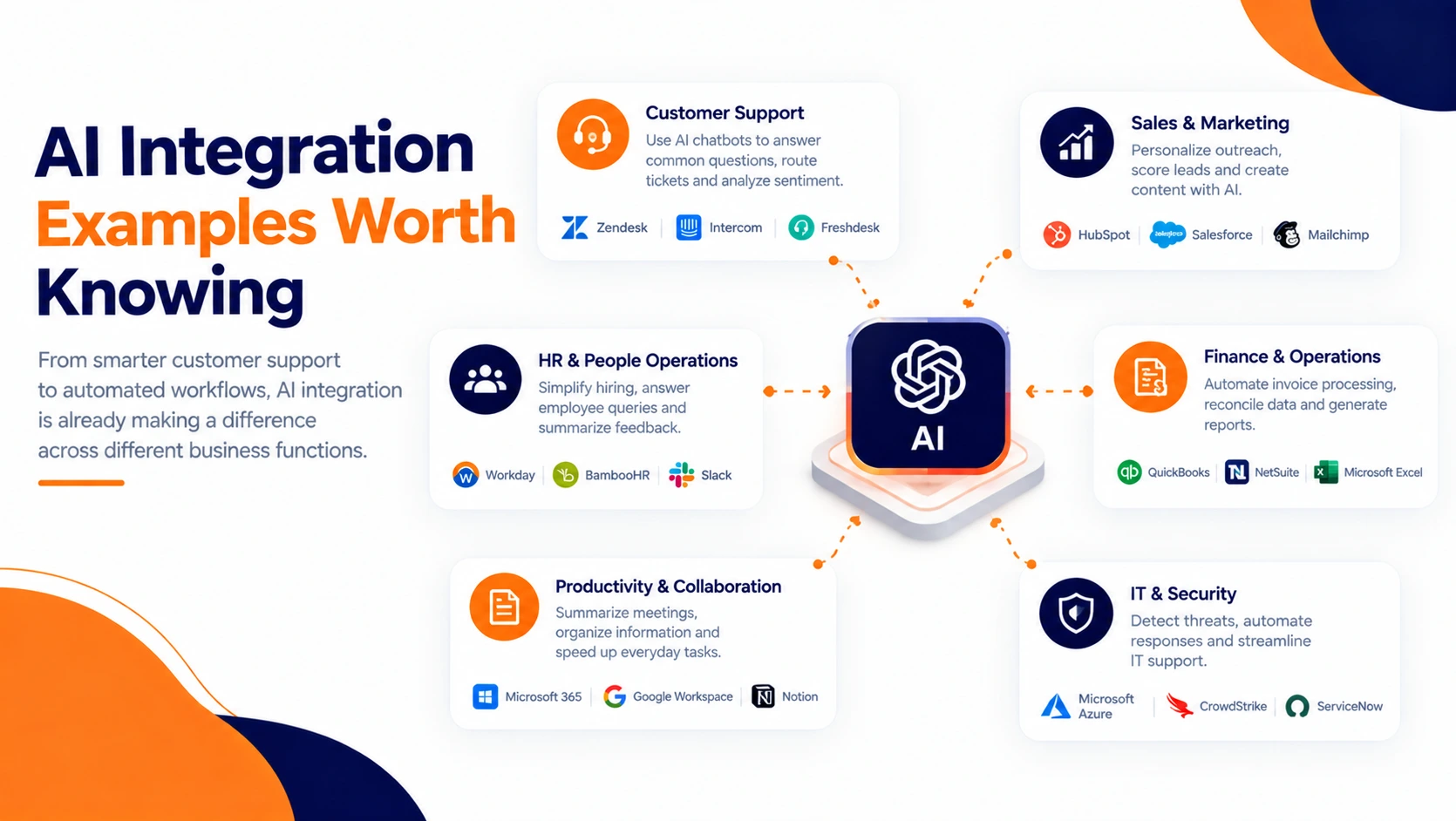
Common AI integration examples include a support chatbot connected directly to a CRM so it can pull real order history, a recommendation engine embedded in an e-commerce platform, and NLP tools layered into internal search so employees can ask plain-language questions instead of hunting through folders. Generative AI integration specifically covers writing assistants embedded in a CMS, automated first drafts of internal reports, and workflow automation tools like Zapier or Make wired directly to an AI layer.
AI Integration Tool vs. AI Integration Course vs. AI Integration Game
Worth separating, since all three get searched together: an AI integration tool is the actual software doing the connecting—APIs, middleware, and data pipelines. An AI integration course teaches the underlying skills for teams building in-house capability. And "AI integration game" is usually someone searching for an interactive AI demo or educational tool, not an enterprise service. If that's what brought you here, this article covers the real business version instead.
Why Scoped Pilots Beat Full Rollouts
The integrations that hold up in production almost always start as a scoped pilot on one workflow, not a company-wide rollout on day one. Running AI against a single ticketing queue or one document store first gives a real signal on accuracy and adoption before permission design and monitoring get layered across every system. Vendors pushing straight to full deployment skip the step that actually tells you whether the integration works.
What Are the Top 5 AI Services?
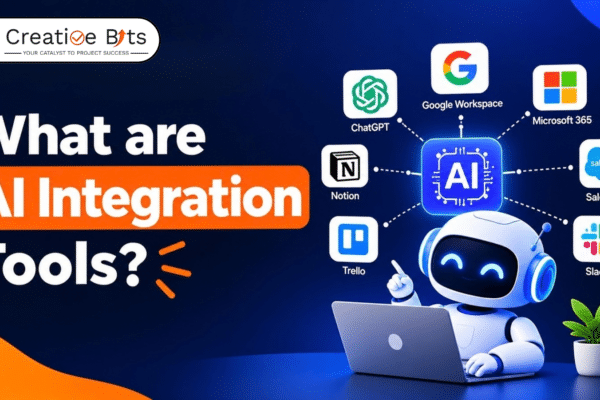
Most generative AI integration services on the market fall into five categories: CRM and ERP integration (connecting AI to systems of record), retrieval-augmented generation over internal documents, agent tool access for automating multi-step tasks, API orchestration between models and existing software, and ongoing evaluation and monitoring to catch quality drift before it becomes a customer-facing problem.
How Much Does an AI Consultant Cost?
Costs vary widely by scope. A single, well-defined integration, retrieval over one document store, or AI triage in one ticketing queue often ships in four to eight weeks and costs meaningfully less than a multi-system agent deployment, where permission design and approval workflows take real engineering time. Most mid-size businesses see ROI within the first few months through reduced manual work rather than any single flashy feature.
Model Choice Matters Less Than Access
Most commonly, this points to the four labs behind the models powering today's integrations: OpenAI, Google DeepMind, Anthropic, and Meta AI. Nearly every AI integration tool on the market- copilots, RAG pipelines, agents- sits on top of one of these four rather than a custom-built foundation model, which keeps most projects faster and considerably cheaper.
AI Integration Jobs and the Skills Behind Them
The rise in AI integration jobs reflects exactly this shift; companies increasingly need people who understand both the model side and the systems side: API orchestration, permission design, and evaluation pipelines, not just prompt writing. It's a genuinely different skill set from pure model development, closer to systems engineering with an AI layer on top.
Picking a Partner Who Integrates Rather Than Bolts On
The clearest signal a vendor understands integration, rather than just AI, is whether they ask about your existing automation setup before they talk about models at all. A team already fluent in wiring platforms like monday.com, Make, n8n, and Zapier together tends to treat AI as one more connected node in that system rather than a separate project running in parallel. That distinction rarely shows up in a pitch deck, but it's usually the reason one integration gets adopted company-wide while another quietly stops being used.
2. What's the difference between an AI integration company and generative AI consulting?
Consulting identifies which use cases and models to pursue; integration is the technical work of wiring that solution into your existing stack.
3. What are some real AI integration examples?
A support chatbot connected to a CRM, a recommendation engine in an e-commerce platform, and NLP-powered internal search are common ones.
4. What is an AI integration tool, exactly?
The software doing the actual connecting: APIs, middleware, and data pipelines, as opposed to a course (which teaches the skills) or a game (an interactive demo).
5. What is the 30% rule in AI integration?
An informal benchmark suggests that well-scoped AI automation can cut time spent on a specific task by about 30%, useful for sanity-checking vendor claims.
6. What are the top 5 AI integration services?
CRM/ERP integration, retrieval-augmented generation, agent tool access, API orchestration, and ongoing evaluation and monitoring.
7. How much does an AI consultant typically cost?
It varies by scope; a single integration usually ships in four to eight weeks and costs less than a multi-system agent deployment requiring more engineering time.
What do AI integration jobs actually involve?
A mix of systems engineering and AI knowledge, API orchestration, permission design, and evaluation pipelines, not just prompting.
2. What's the difference between an AI integration company and generative AI consulting?
Consulting identifies which use cases and models to pursue; integration is the technical work of wiring that solution into your existing stack.
3. What are some real AI integration examples?
A support chatbot connected to a CRM, a recommendation engine in an e-commerce platform, and NLP-powered internal search are common ones.
4. What is an AI integration tool, exactly?
The software doing the actual connecting: APIs, middleware, and data pipelines, as opposed to a course (which teaches the skills) or a game (an interactive demo).
5. What is the 30% rule in AI integration?
An informal benchmark suggests that well-scoped AI automation can cut time spent on a specific task by about 30%, useful for sanity-checking vendor claims.
6. What are the top 5 AI integration services?
CRM/ERP integration, retrieval-augmented generation, agent tool access, API orchestration, and ongoing evaluation and monitoring.
7. How much does an AI consultant typically cost?
It varies by scope; a single integration usually ships in four to eight weeks and costs less than a multi-system agent deployment requiring more engineering time.
What do AI integration jobs actually involve?
A mix of systems engineering and AI knowledge, API orchestration, permission design, and evaluation pipelines, not just prompting.