monday.com Services
What Is Custom AI Development, Really Explained?
Every business hits the same wall eventually: off-the-shelf AI tools work fine for generic tasks, but they never quite fit how your team actually operates. Custom AI development fills that gap by building an AI system trained on your data and wired into your workflows, instead of forcing your business to adapt to someone else's product.
Custom AI Development Company
A genuine custom AI development company doesn't start by picking a model; it starts by mapping your existing processes and identifying where AI truly removes friction. The difference between a generic chatbot and a real custom build comes down to ownership: who controls the data, who owns the logic, and whether the system can evolve as your business does. Most companies exploring how to build their own AI underestimate how much of the work is integration, not the model itself.
What Is a Custom AI?
A custom AI is a system trained specifically on a single organization's data and built around its exact workflows, rather than a generalized tool serving thousands of different businesses at once. Off-the-shelf AI gives you a general answer; custom AI gives you the right answer for your specific business, because it actually understands your terminology, your systems, and your edge cases.
Building Your Own AI Operating System
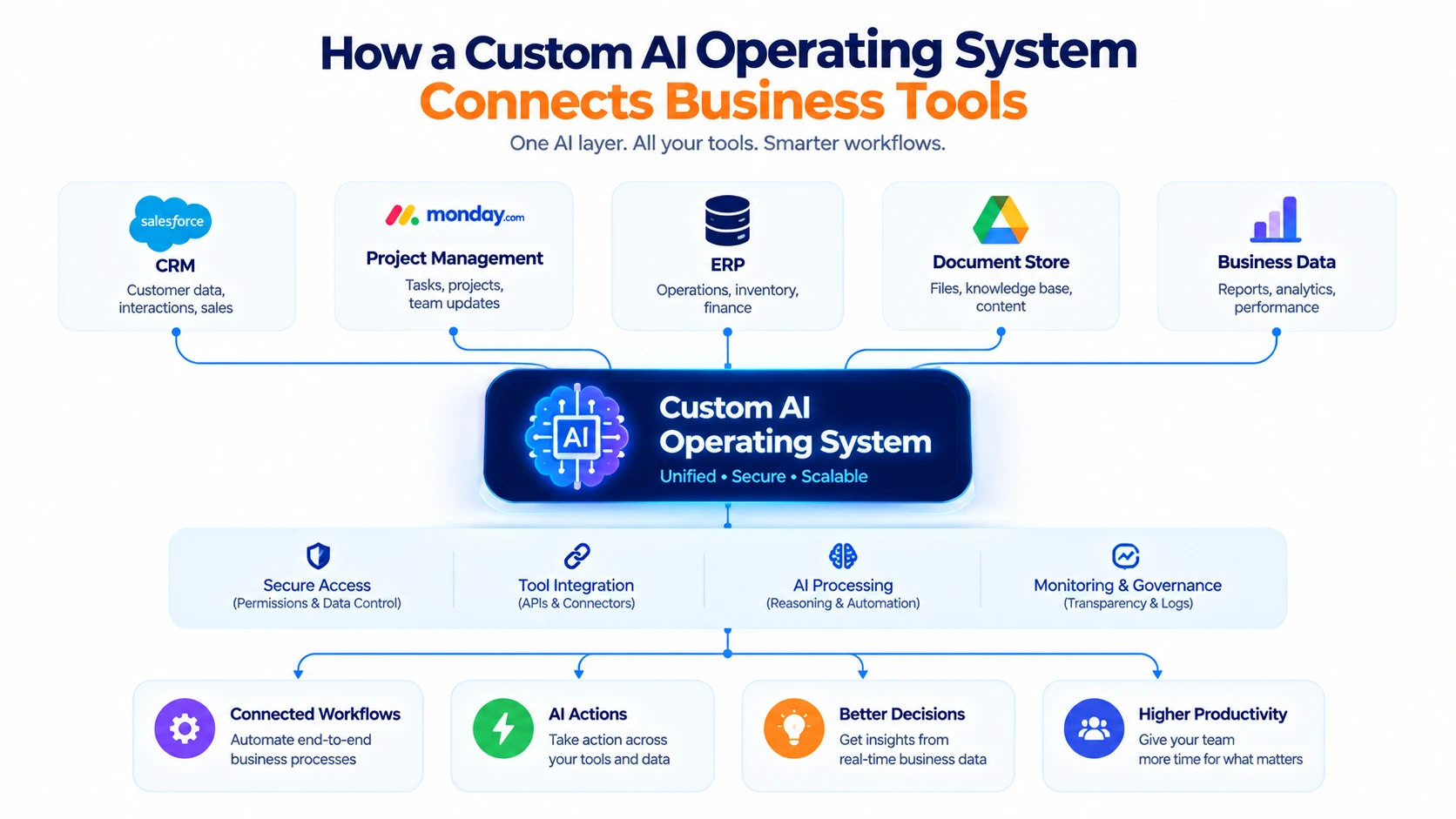
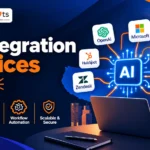
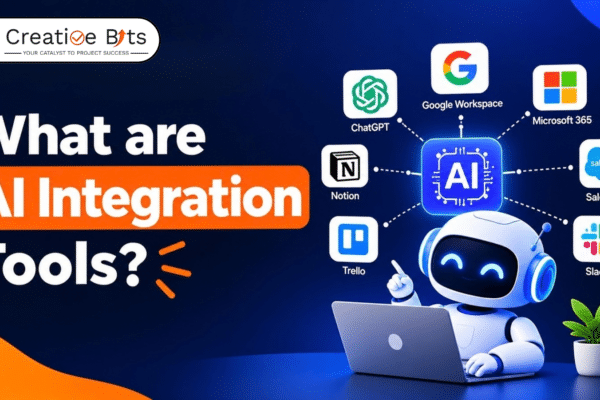
For teams thinking beyond a single chatbot, the question of how to build an AI operating system is really about connective tissue: how AI sits across your CRM, project tools, and reporting, rather than living in one isolated app. This is closer to a Personal AI OS concept: one coherent layer that touches everything you already use, instead of ten disconnected AI features bolted onto ten different tools.
Running an End-to-End Gen AI Project
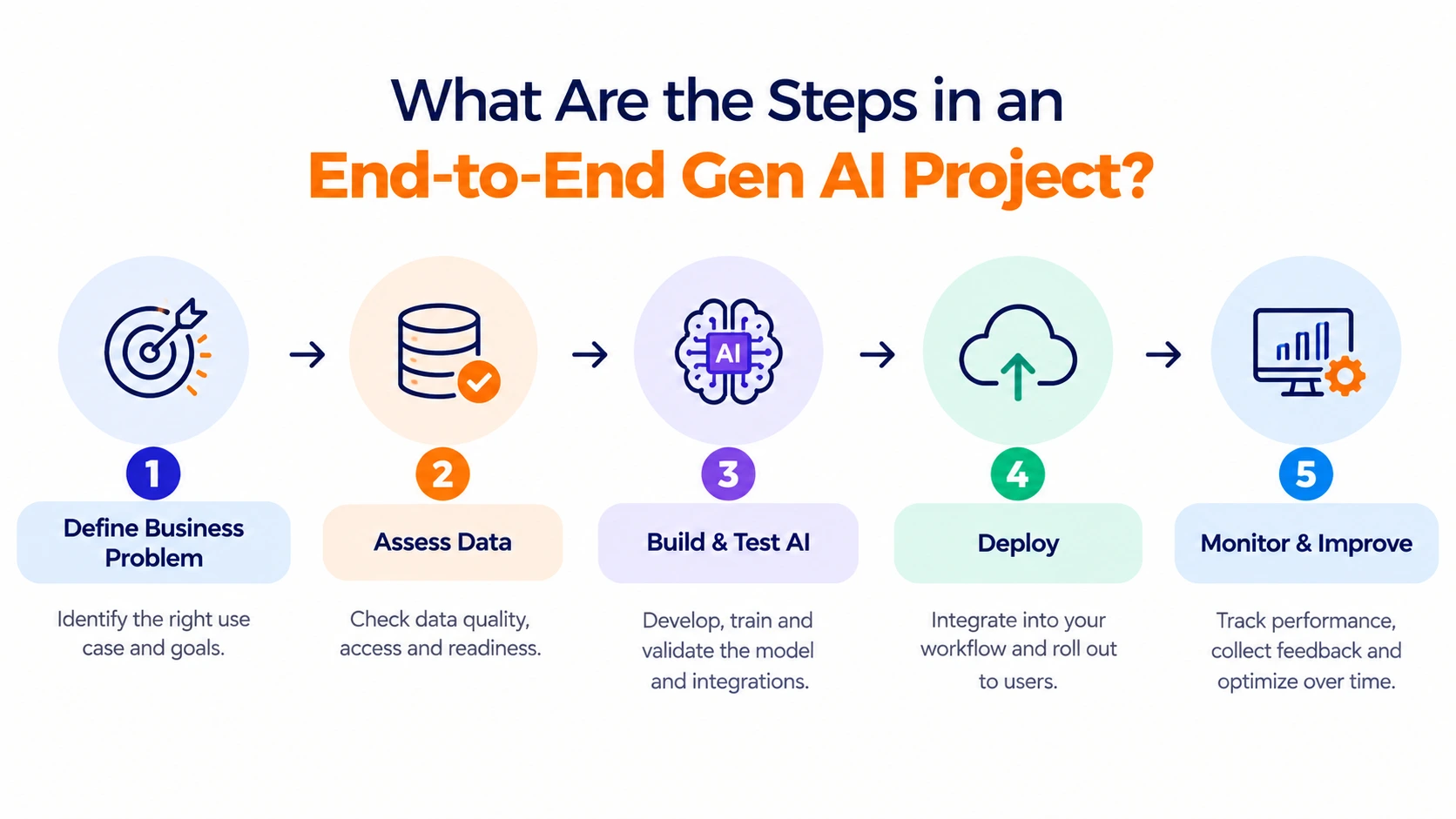
An end-to-end Gen AI project typically moves through the same stages regardless of industry: defining the business problem, assessing whether your data is actually usable, building and testing the model, then deploying and monitoring it in production. Skipping any one of these stages is usually where Gen AI implementation projects quietly stall, not because the model was wrong, but because the integration or data-quality step got rushed.
Starting Small: Gen AI Projects for Beginners
Not every business needs a sprawling end-to-end Gen AI project on day one. Gen AI projects for beginners usually work best when scoped narrowly, automating one repetitive task, like ticket triage or report summarization, before expanding into a full Gen AI pipeline that touches multiple systems. Knowing how to build AI projects incrementally, rather than all at once, is usually what separates a pilot that sticks from one that gets quietly abandoned after month two.
What Is a $900,000 AI Job?
Some specialized AI roles, particularly senior AI architects or applied research leads at major tech companies, have been reported with total compensation packages approaching or exceeding $900,000, largely driven by intense competition for people who can actually ship production AI systems rather than just prototype them. It's a signal of how scarce genuine end-to-end AI implementation skill still is, even as generic AI tools become commoditized.
Which 3 Jobs Will Not Survive AI?
Roles built almost entirely around repetitive, rules-based tasks are most exposed: data entry clerks, basic transcription work, and routine document processing are the three most commonly cited categories likely to shrink significantly as AI handles the bulk of that work. Roles requiring judgment, relationships, or physical presence tend to hold up far better.
How Much Does a Custom AI Cost?
Pricing varies enormously by scope. A narrow, well-defined integration, automating one workflow or connecting AI to one system, can often be delivered in weeks at a modest cost, while a full Gen AI pipeline spanning multiple departments requires significantly more investment in data engineering and testing. Most businesses see measurable returns within a few months on a focused project, with larger initiatives taking six months to a year to show full ROI.
The Integration Work Nobody Budgets For
Most custom AI estimates account for the model and the data prep, but underestimate the last stretch: getting the finished system to actually live inside the tools a team already opens every day. A model that performs well in testing but requires a separate login or a new dashboard tends to get used once and forgotten. The custom builds that stick are usually the ones wired directly into existing project boards, CRMs, or automation platforms, so using the AI doesn't feel like a separate step at all.
2. How is custom AI different from off-the-shelf AI tools?
Off-the-shelf tools give a general answer; custom AI is trained on your specific data and terminology, so it fits your actual business rather than a generic use case.
3. How do I start building my own AI?
Start narrow, one repetitive task or workflow, rather than attempting a full end-to-end system on day one.
4. What does an end-to-end Gen AI project actually involve?
Defining the business problem, checking that your data is usable, building and testing the model, then deploying and monitoring it in production.
5. What is a Gen AI pipeline?
The full chain connecting data, models, and your business systems together, so AI output reaches the tools your team actually works in.
6. How much does custom AI development cost?
It varies by scope; a narrow integration can be delivered relatively quickly and affordably, while a multi-system pipeline requires a larger investment.
7. Which jobs are most at risk from AI?
Repetitive, rules-based roles like data entry, basic transcription, and routine document processing are most commonly cited as exposed.
8. Is a $900,000 AI job real?
Yes, some senior AI architect and applied research roles at major tech companies have been reported at that level, reflecting how scarce true implementation skill still is.
9. What's the difference between an AI feature and an AI operating system?
A single AI feature lives in one app; an AI operating system connects AI consistently across your CRM, project tools, and reporting all at once.