monday.com Services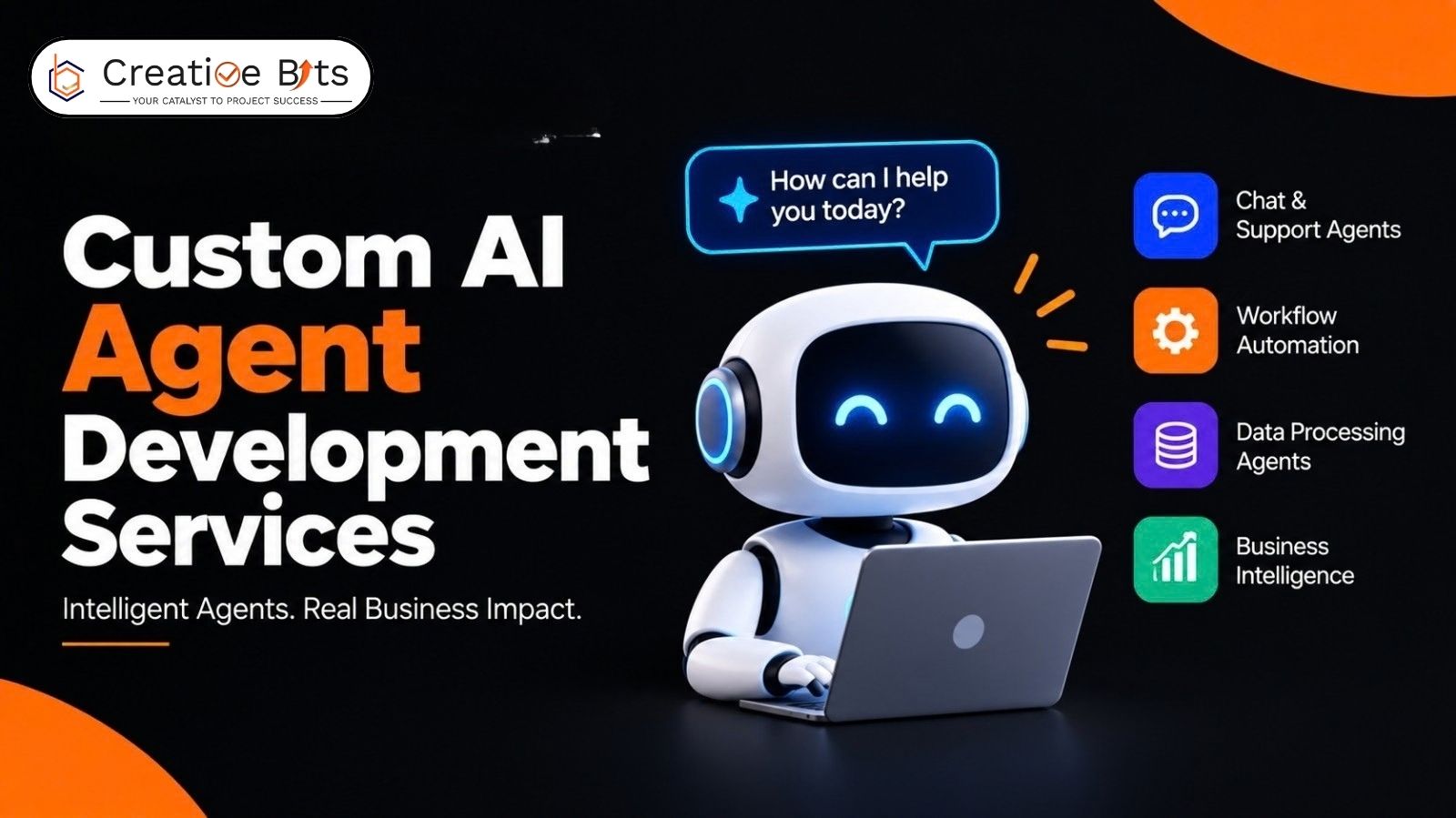
How Do Custom AI Agent Development Services Actually Deliver Results?
Most businesses exploring custom AI agent development services hit the same question fast: is this actually different from the chatbot we already tried, or just a rebrand of the same thing? The honest answer is yes- genuinely different. A proper AI agent doesn't just respond to messages; it takes real action inside your systems, and that distinction shapes everything from cost to timeline.
AI Agent Development Company in India
India has become a strong hub for AI development services, with a growing number of firms offering everything from proof-of-concept agents to full multi-agent systems integrated with enterprise CRMs and ERPs. An AI agent development company in India typically brings the same core process seen globally: consultation, architecture design, data preparation, model fine-tuning, and deployment, often at more competitive rates than Western firms, without sacrificing technical depth.
What Are Custom AI Agents?
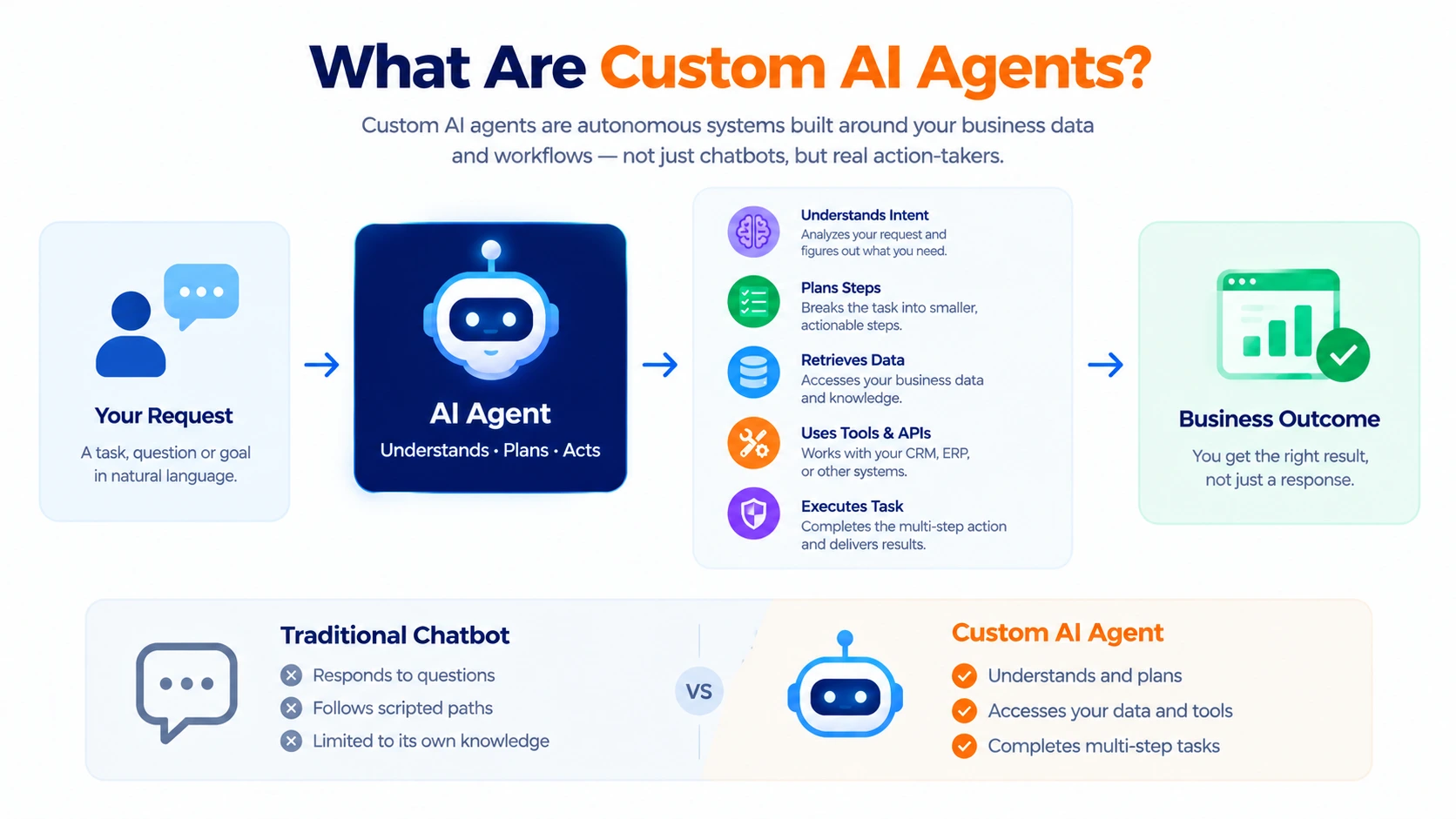
A custom AI agent is an autonomous system built around a specific business's data and workflows, capable of interpreting requests, retrieving information, and executing multi-step tasks rather than just generating a response. Unlike a standard chatbot, which follows scripted paths, AI agent development typically includes a planning module, a memory system, and access to external tools or APIs—a combination that lets an agent complete a task rather than just describe how to do it.
Agentic AI Development Company vs. Gen AI Development Services
There's a meaningful difference between an agentic AI development company and a firm offering broader Gen AI development services. Agentic development focuses specifically on autonomous, task-executing systems; generative AI services cover a wider category, including content generation, summarization, and chat interfaces that don't necessarily take independent action. The strongest partners, often structured as a dedicated AI development agency, offer both, so a project doesn't stall between strategy and actual autonomous execution.
Can I Build My Own AI Agent?
Technically, yes, open-source frameworks and pre-trained models have lowered the barrier considerably. But building something that reliably integrates with your CRM, respects data permissions, and doesn't hallucinate on business-critical tasks is a different challenge than a weekend prototype. Most businesses that try building in-house eventually bring in AI agent consultants once the project moves from proof-of-concept to something meant to run in production daily.
Which Company Develops Custom AI Agents?
The field spans a wide range: boutique agentic specialists, larger digital engineering firms, and workflow-focused automation partners all build custom agents, but with different starting points. Some begin from the model outward; others begin from your existing workflow and work the agent into it. That second approach tends to produce agents people actually keep using, rather than ones that get quietly abandoned after the initial demo.
How Much Does It Cost to Develop Custom AI Software?
Pricing varies significantly by scope. A focused proof-of-concept agent, handling one well-defined task, can often be delivered in four to eight weeks at a modest cost. A full multi-agent system integrated across CRM, ERP, and internal databases, with proper security and compliance layers, typically runs three to six months and requires considerably more investment in data engineering and testing. Most businesses see initial validation within the first phase, with measurable ROI building over the following months as the agent's scope expands.
Choosing the Right AI Agent Consultants
Not every firm offering AI development services is equally equipped for agentic work specifically. Look for evidence of real production deployments, not just demos; a team that can show an agent actually running in a client's daily workflow, handling real requests, is a far stronger signal than a polished pitch deck. Ask directly about data governance, guardrails against hallucination, and how the agent behaves when it encounters a request outside its scope.
Where Agent Projects Actually Succeed or Stall
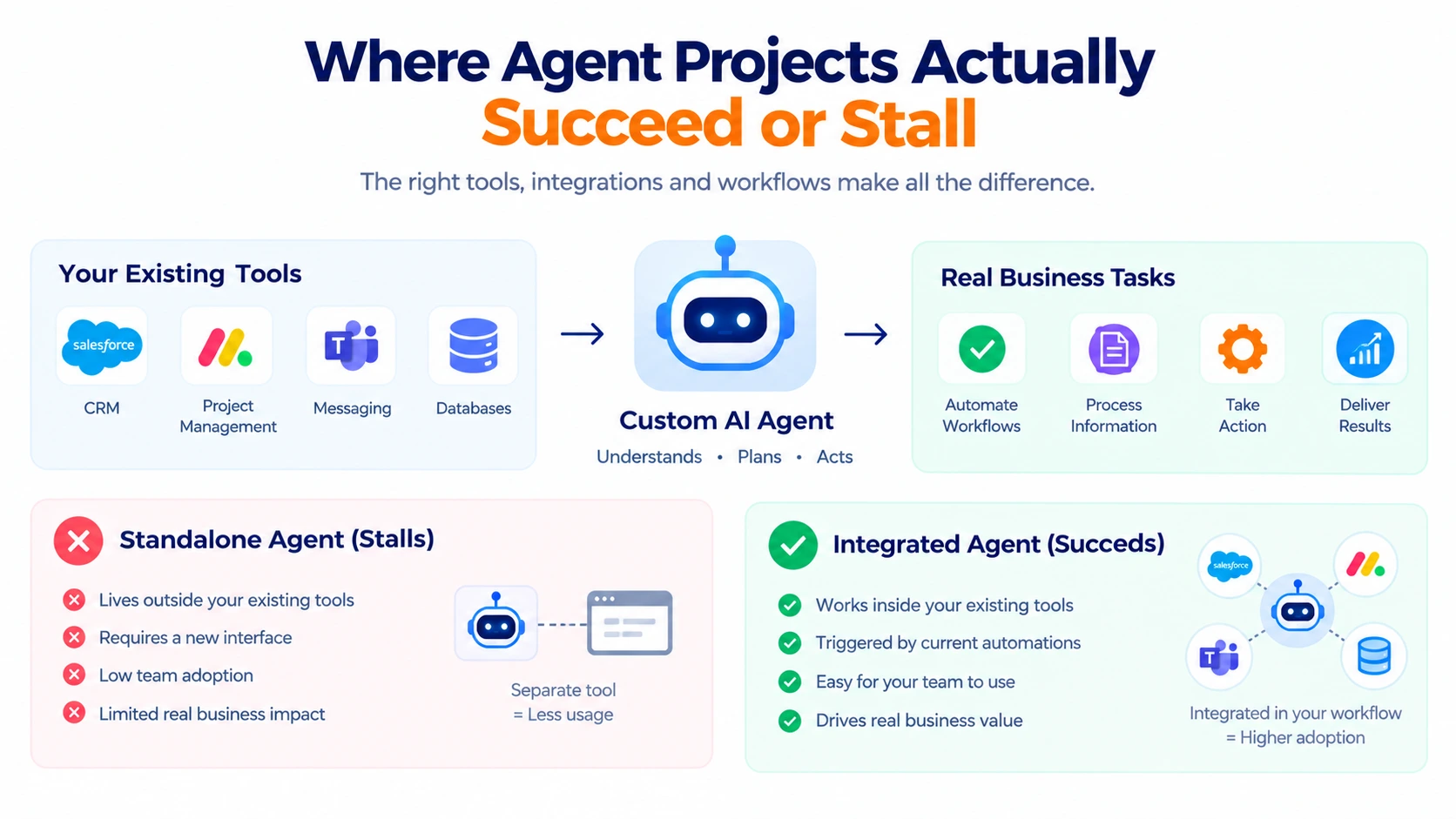
Most failed agent projects don't fail on the model; they fail on the handoff into daily use. An agent that can technically complete a task but lives outside the tools your team already opens every day rarely survives past the pilot phase. The projects that stick are the ones where the agent shows up inside an existing CRM, project board, or messaging tool, triggered by the same automations a team is already running, rather than asking anyone to learn a new interface to get value from it
2. Can I build my own AI agent without a development team?
You can prototype one with open-source tools, but reliable production deployment, integration, permissions, and hallucination control usually require specialist expertise.
3. What are custom AI agents, exactly?
Autonomous systems that interpret requests, retrieve information, and execute multi-step tasks, built around your specific data rather than a generalized model.
4. Which company develops custom AI agents?
It ranges from boutique agentic specialists to larger digital engineering firms and workflow-focused automation partners; the right fit depends on whether you want a model-first or workflow-first approach.
5. How much does it cost to develop custom AI software?
A focused proof-of-concept agent often costs less and ships in four to eight weeks; a full multi-system deployment typically takes three to six months and costs considerably more.
6. What's the difference between an AI agent and a chatbot?
A chatbot follows scripted responses; an AI agent can plan, retrieve real-time data, and take multi-step action inside your systems.
7. Do I need an agentic AI development company or a broader Gen AI partner?
It depends on the scope: agentic firms focus on autonomous task execution, while broader Gen AI partners also cover content generation and chat interfaces.
8. What should I look for in AI agent consultants?
Evidence of real production deployments, clear answers on data governance, and a plan for handling requests outside the agent's defined scope.
9. Is an AI agent development company in India a good option?
Many offer the same end-to-end process seen globally, from consultation through deployment, often at more competitive rates without sacrificing technical depth.