monday.com Services
Can Project Management Service Be the Powerful Solution for Smarter Project Delivery?
Projects rarely fail because a team has nothing to do. More often, problems arise from unclear ownership, missed deadlines, communication gaps, limited resources, or processes that cannot keep up with business growth. Project management as a service gives businesses access to experienced project leadership without requiring them to build a large permanent project-management function.
Instead of hiring full-time specialists for every initiative, organisations can bring in the right expertise when they need it. This approach can support planning, execution, reporting, risk management, stakeholder communication, workflow improvement, and project closeout.
For growing companies, project management service can therefore become a flexible way to improve delivery while keeping internal teams focused on their core responsibilities.
What is project management as a service?
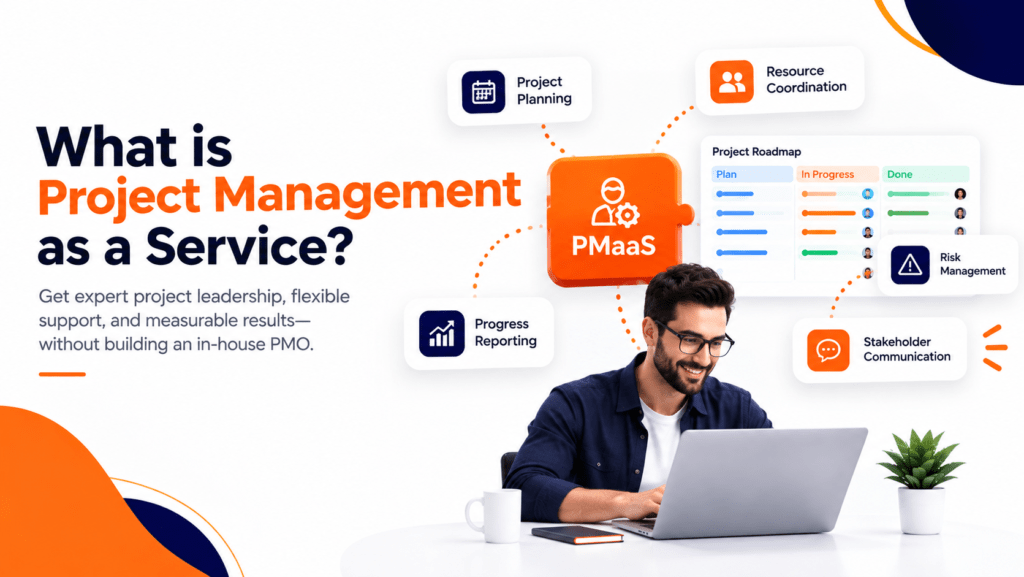
Project management as a service (PMaaS) is a delivery model in which an external team provides project-management expertise, processes, tools, and leadership according to a company's requirements.
Rather than simply supplying an individual project manager, a strong PMaaS model can cover the complete project lifecycle—from initial scoping and planning through execution, monitoring, reporting, and closeout.
A typical project management service engagement may include:
- Project planning and scheduling
- Scope and milestone management
- Resource coordination
- Risk and issue management
- Stakeholder communication
- Project reporting
- Workflow design and optimization
- Project governance
- Tool configuration
- Delivery oversight
This makes PMaaS useful for companies that are scaling quickly, launching transformation initiatives, handling multiple projects, or experiencing a temporary shortage of internal project-management capacity.
Creative Bits follows a similar model by combining dedicated project managers with practical methodology, project-management tools, reporting, and workflow optimisation.
Why are businesses adopting project management as a service?
The biggest advantage of project management as a service is flexibility.
A company may need experienced project leadership for three months, six months, or for a specific transformation initiative. Hiring a permanent team may not always make financial or operational sense.
PMaaS allows organisations to access expertise according to actual demand.
It can also help businesses:
- Reduce project-management overhead
- Improve project visibility
- Establish consistent processes
- Identify risks earlier
- Improve accountability
- Increase delivery predictability
- Scale project resources more easily
- Introduce better project-management tools.
Research and industry discussions around PMaaS frequently emphasise scalability, external expertise, process improvement, and the ability to add or reduce project-management resources as business requirements change.
What does a project management consultant actually do?
A project management consultant provides specialised guidance and leadership to help an organisation plan, execute, and improve projects.
Depending on the engagement, the consultant may evaluate current processes, create project plans, establish governance structures, manage stakeholders, monitor performance, and introduce better workflows.
A consultant can also help identify why projects are consistently delayed or why teams spend excessive time on administrative work.
A project delivery consultant takes this focus further by concentrating on turning project plans into measurable outcomes. This can include coordinating teams, tracking milestones, managing dependencies, resolving blockers, and keeping stakeholders informed.
The objective is not simply to keep a project busy. It is to keep the project moving toward its intended business outcome.
What is the 80/20 rule for project managers?
The 80/20 rule, also known as the Pareto Principle, suggests that a large proportion of results often comes from a relatively small proportion of activities.
For project managers, the principle can be applied practically.
Instead of spending most of the day reacting to every notification or manually updating every detail, an effective PM identifies the activities that have the greatest impact on delivery.
For example, the highest-value 20% of project-management activities may involve:
- Resolving critical blockers
- Managing major risks
- Clarifying priorities
- Communicating with key stakeholders
- Protecting important milestones
- Making timely decisions
This is one reason project management as a service can be valuable. Experienced project leadership can help teams distinguish between activity and actual progress.
Automation can also reduce repetitive administrative work. Creative Bits uses workflow automation and connected tools to reduce manual tasks and improve operational visibility.
Is PM a stressful job?
Yes, project management can be stressful, particularly when deadlines, budgets, resources, stakeholders, and changing requirements collide.
However, stress often comes from uncertainty rather than project management itself.
Poorly defined scope, unclear ownership, unrealistic deadlines, communication problems, and unmanaged risks can increase pressure on everyone involved.
A structured approach can reduce that uncertainty.
A capable PM establishes priorities, tracks risks, communicates changes, monitors progress, and escalates problems before they become major issues.
This is another area where project management as a service can provide value. An external PM team can introduce structure and accountability when an organisation does not have enough internal capacity.
What is PMO as a service?
PMO as a Service is an extension of the PMaaS concept. Instead of managing only individual projects, a service provider can help establish or operate project-management-office functions across multiple initiatives.
A PMO as a service may support:
- Project governance
- Standardized templates
- Portfolio reporting
- Project prioritization
- Resource planning
- Risk management
- Performance dashboards
- Methodology development
- Project documentation
- Process improvement
This can be particularly useful for organisations that are growing their project portfolio but are not ready to create a large internal PMO.
In this model, project management as a service can provide hands-on delivery while PMO-as-a-service provides the broader governance and operating structure.
How can technology improve project management as a service?
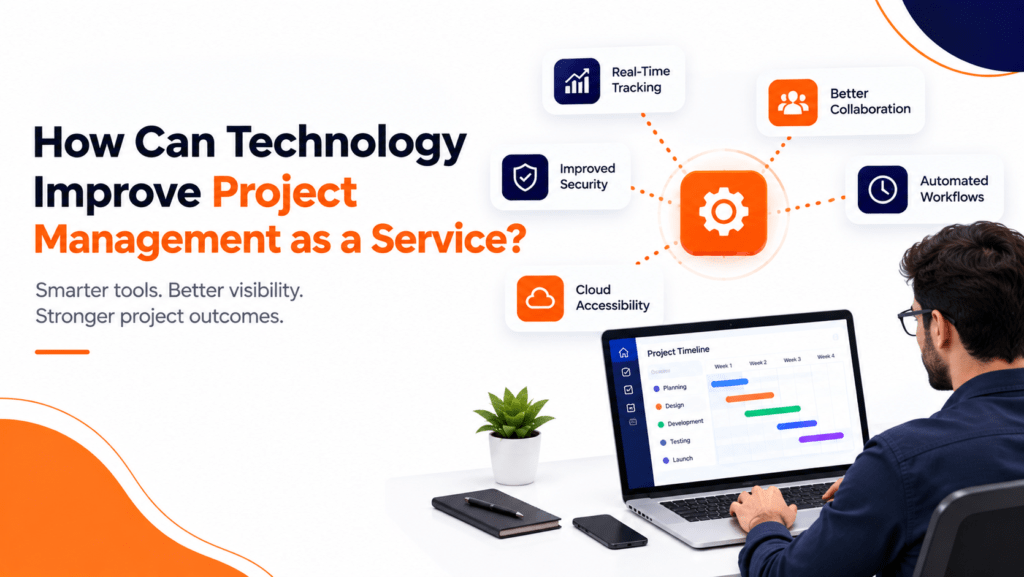
Technology makes modern project management as a service more scalable.
Project-management platforms can centralise tasks, deadlines, owners, dashboards, files, communication, and reporting. Automation can then handle repetitive actions such as notifications, status changes, assignments, approvals, and reminders.
Creative Bits combines PMaaS with workflow automation and monday.com solutions, allowing project-management processes to be supported by connected systems rather than manual administration alone.
AI can add another layer by helping teams summarise information, process data, automate repetitive activities, and support decision-making. Creative Bits positions its AI offering around practical business automation, intelligent data processing, and custom integrations.
Is project management as a service right for your business?
Project management as a service may be a strong option if your organisation:
- Has more projects than its internal PM team can handle
- Needs experienced project leadership quickly
- Wants to avoid unnecessary permanent hiring
- Is launching a major transformation
- Needs better project governance
- Has inconsistent project processes
- Wants improved reporting and visibility
- Needs help optimising project workflows
The important consideration is not simply whether you can outsource project management. It is whether the service provider can understand your business, communicate effectively with stakeholders, work within your existing processes, and improve delivery over time.
Creative Bits describes its approach as tailored rather than one-size-fits-all, combining project management with workflow automation, monday.com, AI, and productivity solutions.
What should you look for in a PMaaS provider?
When evaluating project management as a service, look beyond the number of project managers available.
Consider whether the provider offers:
- Experienced project leadership
- A defined delivery methodology
- Clear reporting
- Risk and issue management
- Strong stakeholder communication
- Scalable resources
- Workflow and automation expertise
- Appropriate project-management technology
- Transparent accountability
- Continuous improvement
The best PMaaS relationship should feel like an extension of your team rather than simply an outsourced administrative function.
Final Thoughts
Project management as a service is becoming an increasingly practical model for businesses that need project expertise without unnecessary overhead. It combines people, processes, technology, and delivery accountability into a flexible service.
Whether a business needs support for one complex initiative, several concurrent projects, or a broader PMO transformation, the right model can provide structure while allowing internal teams to focus on strategic priorities.
For businesses looking to improve project delivery, workflow automation and modern project-management technology can make the model even more effective. Creative Bits brings together PMaaS, workflow automation, monday.com solutions, AI development, and productivity-focused technology to help organisations build more scalable ways of working.
If your projects are growing faster than your internal capacity, project management as a service can provide the expertise, structure, and flexibility needed to move from managing activity to achieving measurable results.
A project management service provider can manage project planning, milestones, resources, risks, communication, reporting, workflows, governance, and overall project delivery. Businesses may use project management services when they have limited internal capacity, multiple projects, inconsistent processes, tight deadlines, or a need for experienced project leadership. Key benefits include improved project visibility, better accountability, consistent processes, earlier risk identification, more predictable delivery, scalable resources, and reduced project-management overhead. Project management services can provide hands-on support across project delivery, while project management consulting generally focuses more on specialised guidance, process evaluation, planning, governance, and improvement. Yes. Project management services can incorporate workflow automation to reduce repetitive administrative tasks such as notifications, assignments, approvals, status changes, and reminders. PMO as a Service provides broader project-management-office support across multiple initiatives. It can include project governance, portfolio reporting, resource planning, performance dashboards, documentation, and process improvement. A business may consider these services when its internal team cannot handle the project workload, it needs experienced leadership quickly, it wants better project governance, or it needs to improve reporting and workflows. Project-management platforms can centralise tasks, deadlines, owners, dashboards, files, communication, and reporting. Automation and AI can further reduce manual work and support information processing and decision-making.
2. What does a project management service provider do?
3. Why do businesses need project management services?
4. What are the benefits of project management services?
5. What is the difference between project management services and project management consulting?
6. Can project management services help with workflow automation?
7. What is PMO as a Service?
8. When should a business consider project management services?
9. How can technology improve project management services?