monday.com Services
Which Artificial Intelligence Development Services Actually Drive Automation?
That one distinction explains why the market for artificial intelligence development services looks so different in 2026 than it did two years ago. Demand has shifted from systems that respond when asked to systems that complete multi-step work on their own, and the engineering, governance, and risk profile of the latter are genuinely different.
So here's a practical guide to artificial intelligence development services: what agent-based automation involves, which services exist, how to read provider rankings honestly, and who needs to be on the team building it.
AI Agent Development Services for Business Automation and Efficiency
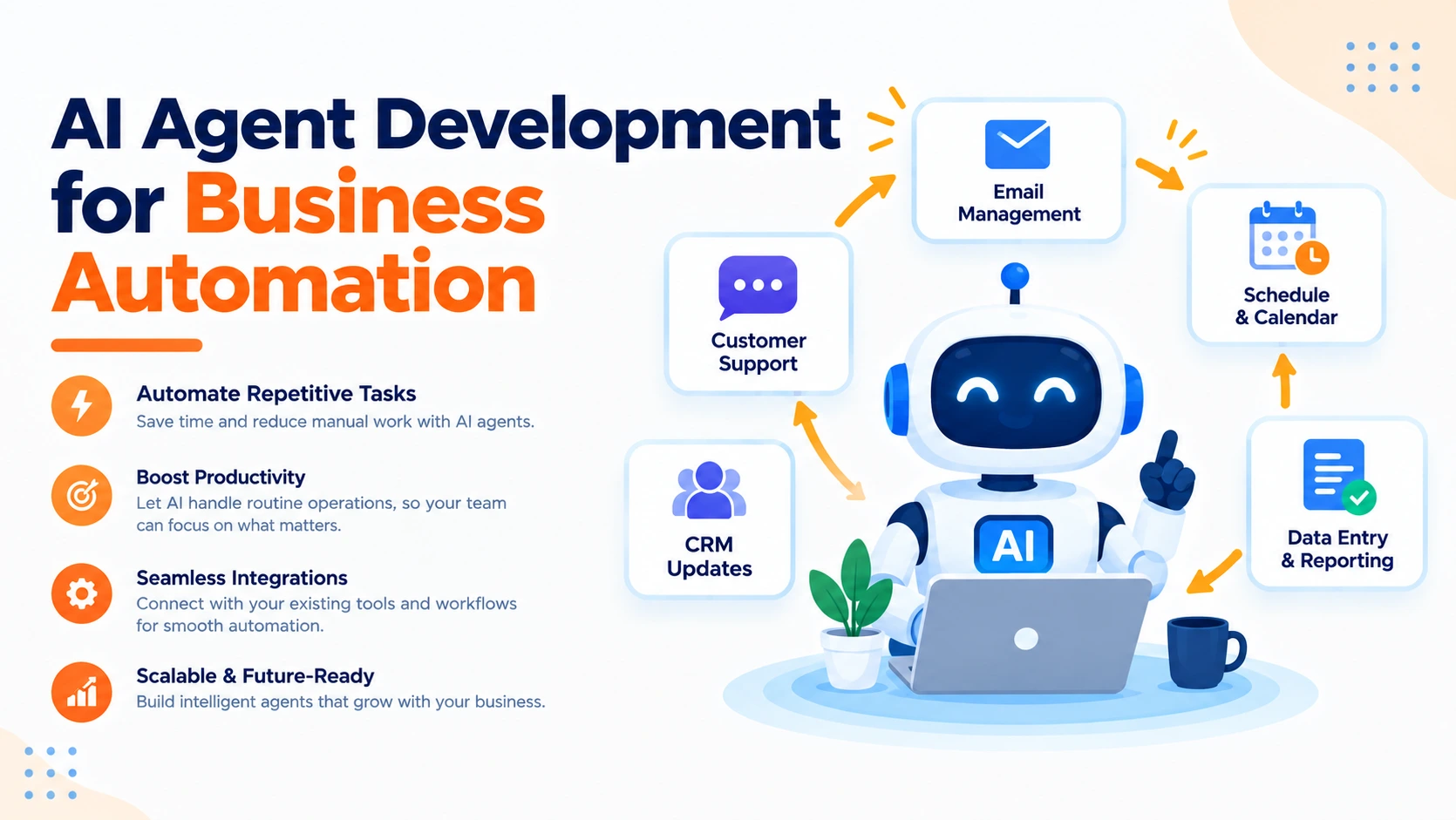
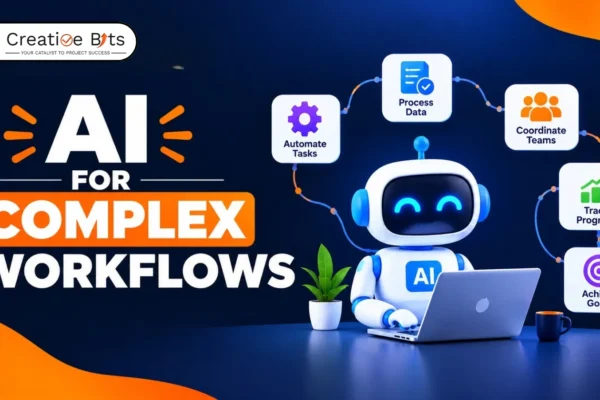
An agent is not a smarter chatbot. The difference is autonomy: an assistant waits to be asked and answers; an agent pursues a goal, chaining tools, decisions, and system calls until the task is done.
That shift is the core of modern artificial intelligence development services, and it shows up in four patterns:
Agentic workflows for a function. Finance, HR, and operations are where this lands first: an agent that reads an invoice, validates it against a purchase order, codes it, and stages the payment for approval.
Approval checkpoints on sensitive actions. This is the non-negotiable design feature. Anything irreversible, money moving, an email leaving, a record being deleted, pauses for a human. Artificial intelligence development services that skip this produce systems nobody will switch on.
Multi-agent collaboration. Specialised agents handing work to each other, orchestrated by frameworks built for the purpose. Mature artificial intelligence development services treat this as architecture, not improvisation.
Integration with what you already run. CRM, ERP, helpdesk, ticketing. Most of the engineering hours in artificial intelligence development services go here, not into the model.
The efficiency case is straightforward: an agent absorbs volume without proportional headcount. The governance case is the one to get right first.
What AI Service Is the Best for Business?
There isn't a single best one, and any provider of artificial intelligence development services who names one before hearing your problem is selling rather than scoping. The current catalogue spans roughly eleven offerings:
- AI consulting, strategy, roadmapping, use-case identification, data-readiness checks, the business case and ROI plan, plus ethical and compliance guardrails
- AI product engineering, architecture, model development, deployment, monitoring, scaling
- Generative AI development services, content, drafting, summarisation, synthesis
- AI agent development, autonomous multi-step workflows
- Chatbot and voice agent development, conversational interfaces, text and spoken
- AI integration, connecting models into existing systems
- AIOps, AI applied to IT operations and incident management
- AI-as-a-Service, capability consumed rather than built
- Intelligent RPA, robotic automation with interpretation layered on
- AI copilots, in-app assistance inside tools people already use
The honest recommendation: pick the lightest service that solves your problem. If you can't yet name the problem in measurable terms, consulting is the right first purchase, not a build. That sequencing is what separates useful artificial intelligence development services from expensive ones.
Which AI Agent Is Best for Business Development?
Within artificial intelligence development services aimed at sales and growth, five agent patterns earn their place.
Lead research and enrichment. Firmographics, buying signals, and contact identification pulled together into a ranked list with a reason attached to each name.
Outreach drafting. Personalised first-touch messages in your own voice, queued for a human to send. Never auto-sent.
CRM hygiene. Contacts and deals created from email and calendar activity, so the pipeline reflects reality without anyone doing data entry.
Meeting preparation. A briefing assembled before every call: account history, open threads, last conversation, relevant news.
Proposal and follow-up drafting. First drafts built from past winning documents and the actual deal context.
The common design across all five: the agent does the preparation, a person commits. Artificial intelligence development services built for business development should hold that line, because a misfired outreach sequence costs more reputation than the automation saves in hours.
Who Are the Top AI Development Services Providers?
Before shortlisting artificial intelligence development services, understand how the rankings you'll find are actually built; it changes how much weight to give them.
Major directories split listings into tiers, "Leaders" and "Contenders", and openly state they may earn a fee for some placements, with certain entries marked as sponsored. Badges like "Verified" or "Premier Verified" appear on profiles without the requirements being published. What is not disclosed is the one thing you'd most want: how rankings are weighted, how reviewers are authenticated, and how many reviews qualify a company at all.
So a top AI development company listing is a starting shortlist, not a verdict.
What those directories genuinely do well is filtering. You can narrow by service, client budget, hourly rate, industry, location, tech stack, and project size, and matching your actual constraints is more useful than reading a leaderboard. Regional filters are why searches for a top AI development company in Uthe SA or best artificial intelligence development services for businesses in California return such different sets.
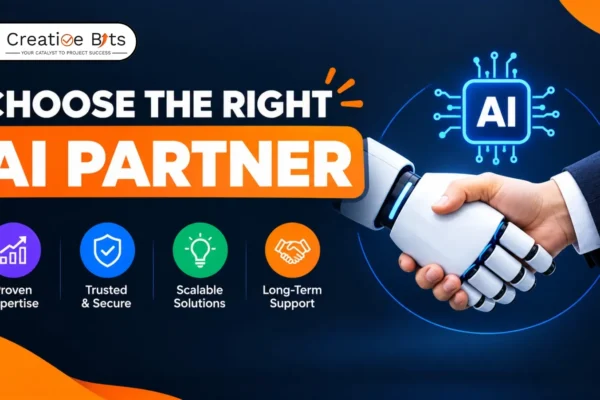
Published selection criteria across industry roundups are reasonably consistent, and these are worth applying yourself: years of relevant production experience, independent reputation rather than marketing claims, structured delivery with realistic estimates, end-to-end services plus integration capability, sector-specific knowledge, completed production deployments rather than pilots, and transparency on KPIs and risk. Providers who can speak to all seven are rare, and the ones who can usually say so with case studies instead of adjectives.
Who Are the Top 5 AI Developers?
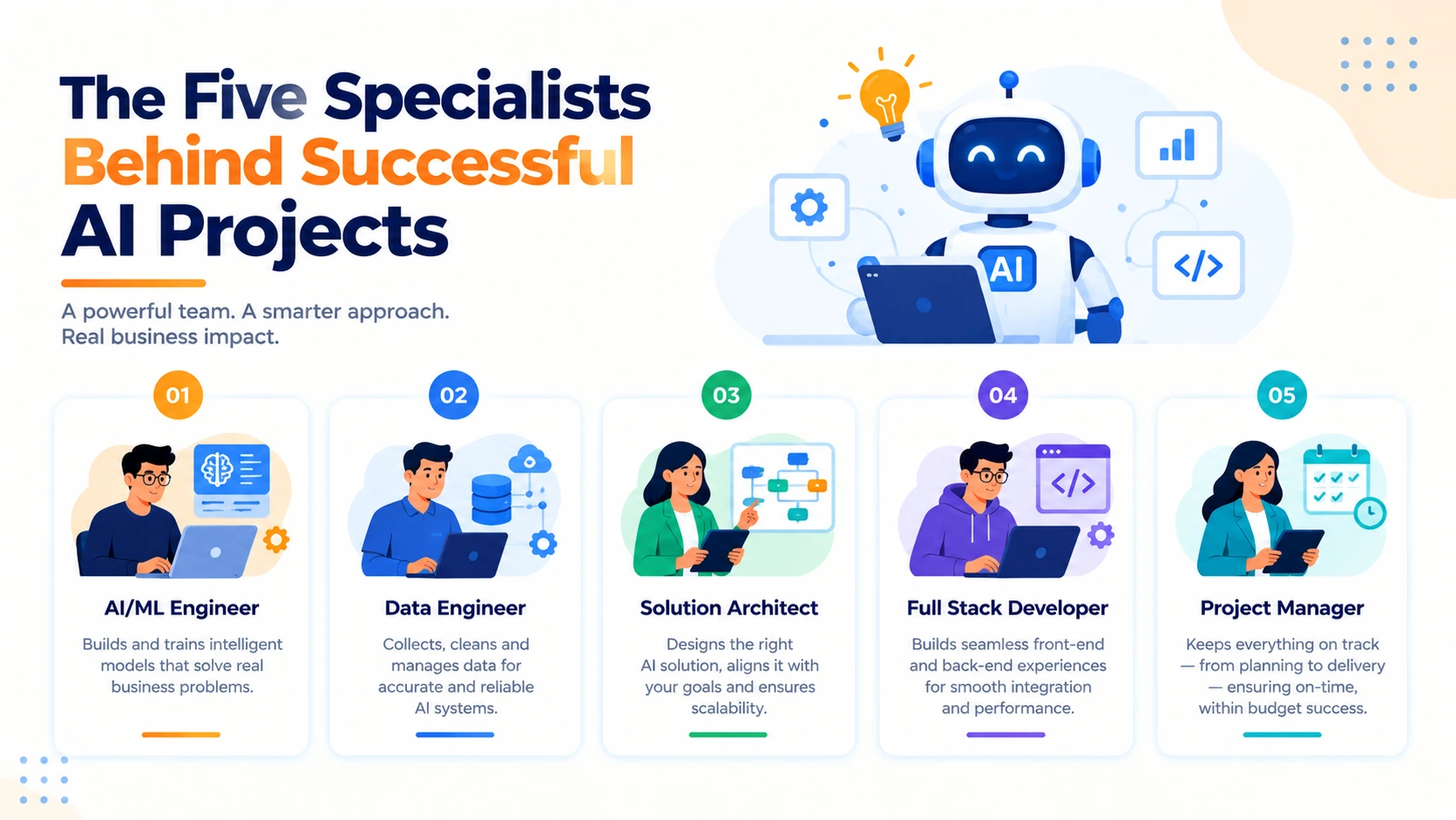
If you mean the roles rather than the vendors, five specialists determine whether a build succeeds.
- The AI/ML engineer: model selection, training, evaluation, tuning.
- The data engineer: pipelines, quality, access. The least glamorous role and the one most projects underestimate.
- The generative AI engineer: prompt architecture, retrieval, evaluation harnesses for non-deterministic output.
- The MLOps engineer: deployment, versioning, monitoring, drift detection, retraining.
- The domain expert: someone who knows what the data means and which edge cases actually matter. No team delivering AI development services can replace this one.
Interview these people, not just the salesperson. Then insist on three things before signing: a proof of concept to surface feasibility problems early, a formal agreement covering scope, deliverables, IP, confidentiality, and reporting cadence, and verified security posture: ISO/IEC 27001, a current SOC 2 Type II report, and for healthcare work, HIPAA safeguards with a Business Associate Agreement.
Scope the Problem, Then Buy the Service
The teams getting returns from artificial intelligence development services aren't the ones who bought the most capability. They picked one expensive, repetitive decision, measured what it cost, and automated exactly that, with a human on every consequential call.
Start there. The artificial intelligence development services catalogue will make much more sense once you name the problem.